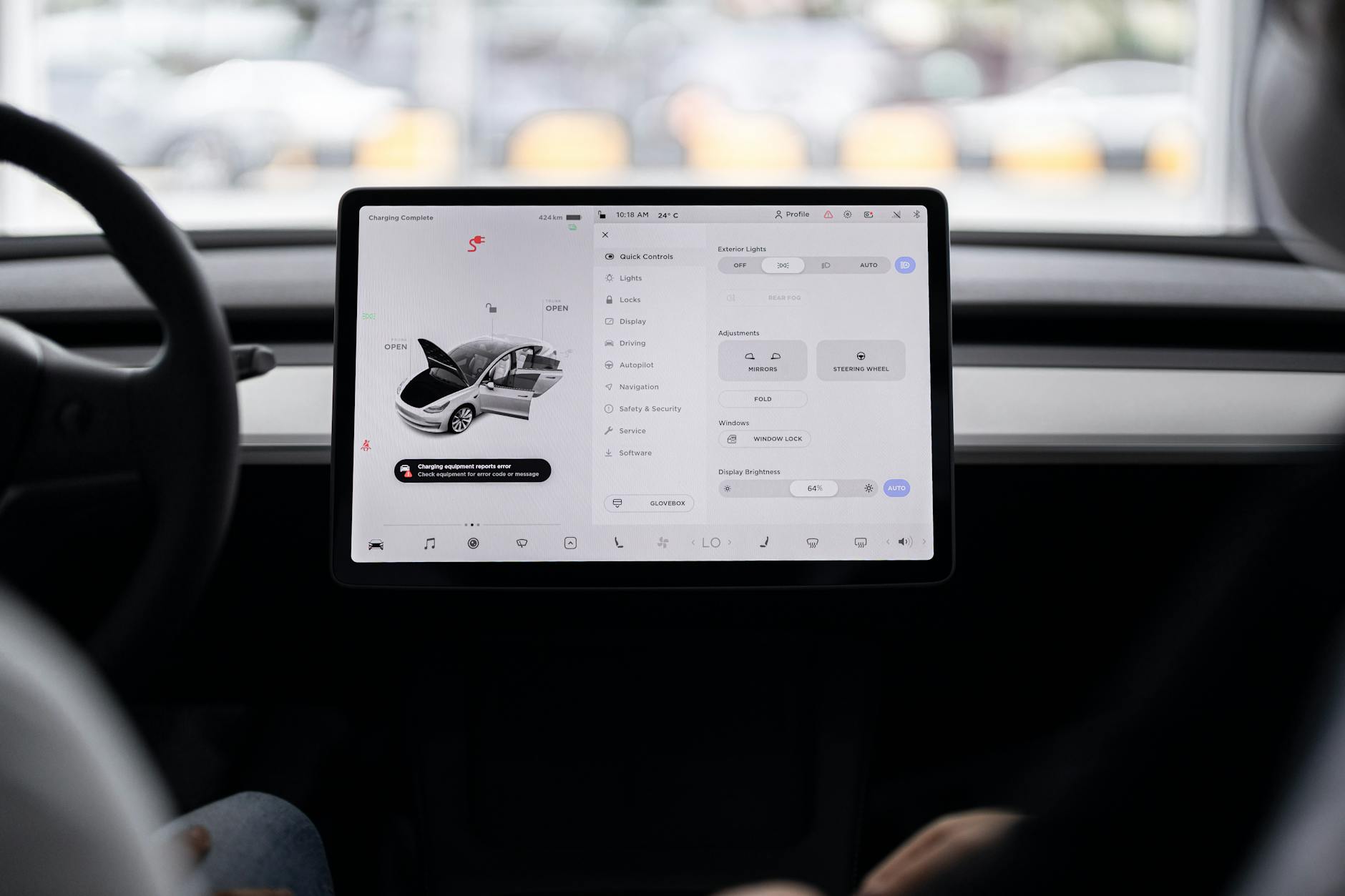
The Signal in Security, Spending, and an AI Reality Check
Automated digest: compiled from the last 24 hours of AI, software/testing, tech, and finance news coverage on October 02, 2026.
Today's stories share a theme: the systems and incentives surrounding technology matter as much as the technology itself. Cyber-physical security, public-sector procurement, and a softer labor market are reshaping how builders and operators plan. The day's biggest signal is that policy and platform choices are converging into hard operational constraints.
Today at a Glance
| # | Story | What happened |
|---|---|---|
| 1 | 🚗 Auto-ISAC Summit Puts Software-Defined Vehicle Security… | Finite State brings product security automation and software-defined vehicle expertise to Auto-ISAC's 2026… |
| 2 | 📉 Soft Jobs Report Lifts Tech Stocks as Yields Ease | A weaker-than-expected September jobs report sent markets higher as Treasury yields eased and tech stocks jumped. |
| 3 | 📄 Anthropic Warns Government Stance May Cost Customer Trust | Anthropic's IPO prospectus reportedly warns that government attitudes could damage customer relationships. |
| 4 | 🛡️ Pentagon Critical Technologies Office Taps In-Q-Tel to… | The Department of War's Critical Technologies Office partners with In-Q-Tel to accelerate adoption of emerging tech. |
| 5 | 🔐 OpenAI Parts With Three Safety Researchers Over Data… | OpenAI reportedly severed ties with three safety researchers over mishandling of sensitive information. |
1. 🚗 Auto-ISAC Summit Puts Software-Defined Vehicle Security Center Stage
Automotive product security is moving from bolt-on audits to automated, continuous pipelines—and the winners will be platforms that make compliance a byproduct of engineering.
Software-defined vehicles turn every firmware release and supplier dependency into an attack surface with physical consequences. Vendors that automate SBOMs, vulnerability triage, and continuous monitoring are positioning themselves as the control plane for automotive product security, a market that will be defined by regulatory pressure rather than marketing. (Business Wire)
2. 📉 Soft Jobs Report Lifts Tech Stocks as Yields Ease
Tech's rally on a weak jobs number is a bet on cheaper capital, not stronger end demand—and that distinction matters when the next earnings cycle arrives.
Markets read the miss as a sign the rate cycle may be turning, which disproportionately benefits long-duration tech valuations. For operators, a cooler labor market can ease hiring pressure, but it also signals softer demand that may catch over-optimistic capacity planning off guard. (Reuters)
3. 📄 Anthropic Warns Government Stance May Cost Customer Trust
The most consequential AI vendor risk is no longer model performance—it's whether government posture makes a partner uninvestable for regulated customers.
AI labs are now pricing political and regulatory risk as a core business variable, not a legal footnote. For enterprise buyers, it confirms that vendor selection increasingly hinges on policy exposure, data handling, and jurisdictional risk—factors that belong in procurement scorecards. (Reuters)
4. 🛡️ Pentagon Critical Technologies Office Taps In-Q-Tel to Speed Adoption
Defense tech procurement is being re-engineered for velocity; startups that can navigate the In-Q-Tel model will outpace those waiting for traditional contracting cycles.
Pairing a defense procurement office with an intelligence-linked venture arm compresses the path from prototype to fielded capability. For dual-use startups, it signals a clearer—if still opaque—route to government revenue, and for incumbents it raises the bar on speed. (U.S. Department of War (.gov))
5. 🔐 OpenAI Parts With Three Safety Researchers Over Data Mishandling
Even safety-focused teams face enforcement when information controls slip—evidence that AI governance is now a personnel and process discipline, not a mission statement.
Frontier labs treat internal information controls as a hard boundary, and departures tied to data handling suggest governance is being enforced more aggressively. For enterprises depending on third-party models, it underscores that safety and security culture are operational realities, not PR lines. (thehackernews.com)
Final Takeaway
Security is shifting left into product design, defense procurement is compressing into a faster pipeline, and capital is rewarding risk-on tech as labor cools. The single most important insight: operators who treat policy, security, and platform decisions as engineering constraints—not compliance afterthoughts—will move faster than peers.
Keep Reading
If you want a sharper read on which platform and product shifts actually deserve your attention, tomorrow’s digest is built for that.
Try Software Insight
Why this fits today’s digest: Track delivery risk, engineering quality, and execution gaps so product and platform decisions are based on signals instead of noise.
References
Read Next

The Office Holiday Party Game That Doesn't Need a Whiteboard, a Deck of Cards, or a Group Chat Vote
The office holiday party hits the 45-minute mark, the snacks are gone, and now twelve people are standing in a circle waiting for someone to suggest something. Holiday Showdown turns that dead air into a game everyone can join from their phone in under a minute.

Why AI Security Spending Is Outpacing AI Security Readiness
Cybersecurity vendors and regulators are racing to operationalize AI-era defense, but the defender's window is narrowing. The real signal is which parts of the stack are being rebuilt versus rebranded.